


Take your kefir to the next level. Learn how to second ferment kefir for to maximize the nutritional value and improve the overall flavor. It’s so easy!
Kefir ferments when you place milk kefir grains and add them to milk to culture for 24 hours. Once the grains are separated, they are transferred to fresh milk and the fermenting process is complete – you know have milk kefir.
By removing the grains, you can use it in smoothies and/or recipes, or you can culture a second time – and this second culturing period is something known as second fermentation.
It’s a really wonderful way to flavor the kefir – especially if you are planning on using a flavored kefir to make a specific recipe.
In our case, I usually second ferment kefir with garlic and then use that second ferment to make garlic infused breakfast biscuits occasionally for the kids. They are delicious!
What are the Benefits of Second Fermentation?
The second fermentation can encourage additional [good] bacteria for the gut, and also help improve the flavor of your kefir. With each ferment, the kefir mellows out and other flavors can be added – you can second ferment with garlic, lemon, chai, or even things like chopped fruit or cocoa powder.
Honey sweetens the kefir, and is wonderful, too!
Second fermentation has many more nutrients and vitamins than first fermentation. That is because you have added a new source for the kefir microbes to feed on, leading to increased vitamins.
It also helps to make the calcium and magnesium more bioavailable, which your body can use right away.
Second fermenting kefir makes it less sour and in some cases, thickens it up.
How to Second Ferment Kefir
Making second ferment kefir might just be the easiest thing you have done. In fact, the hardest part may be picking out the prebiotic item to second ferment with. There are so many choices!
You can add garlic, and then turn around and use the kefir to make garlic infused biscuits; or you can use fresh oranges or strawberries or even lemons.
Cinnamon is amazing in second ferment kefir. Especially if you make pancakes for your kids, or even banana bread.
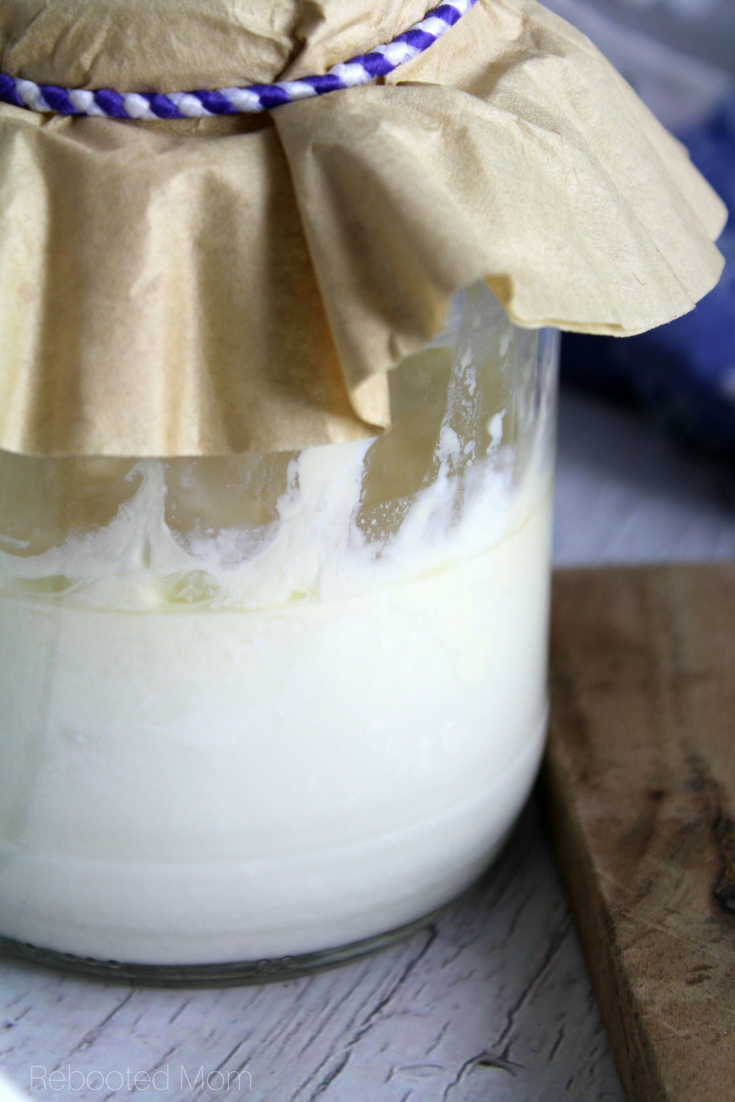
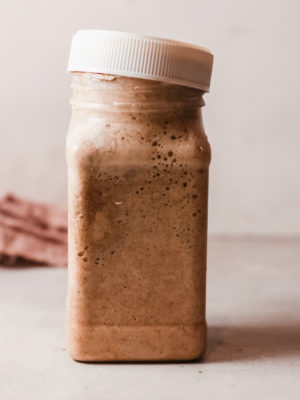
Make basic kefir with your kefir grains, making sure to remove the grains afterwards. (This is regular kefir – above, before straining).
Strain the kefir — place the kefir grains back in the same jar and add milk – these will be your grains that will ferment another batch. The kefir you strained should be kept separate — put that kefir in a clean jar, because you will be adding your choice of a prebiotic item.
Take your prebiotic item you want to ferment with the kefir. It’s always better to use less, because if you use too much, your kefir can separate.
I always use 2 garlic cloves, and within a few hours mine does separate.. but I usually throw it in the fridge within 4-5 hours.
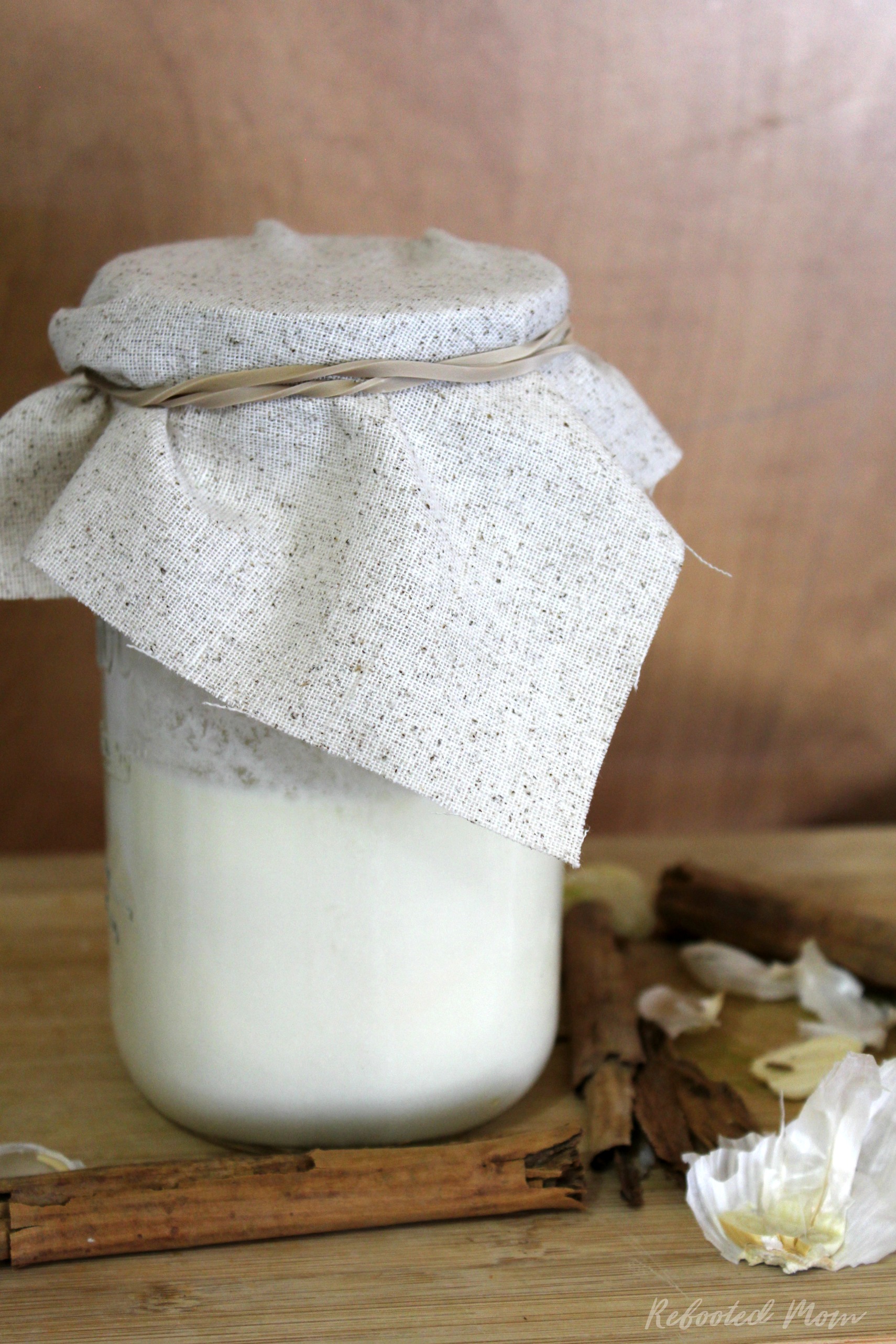
Put that second ferment kefir + your choice of prebiotic into an oxygen deprived, anerobic, environment (without oxygen).
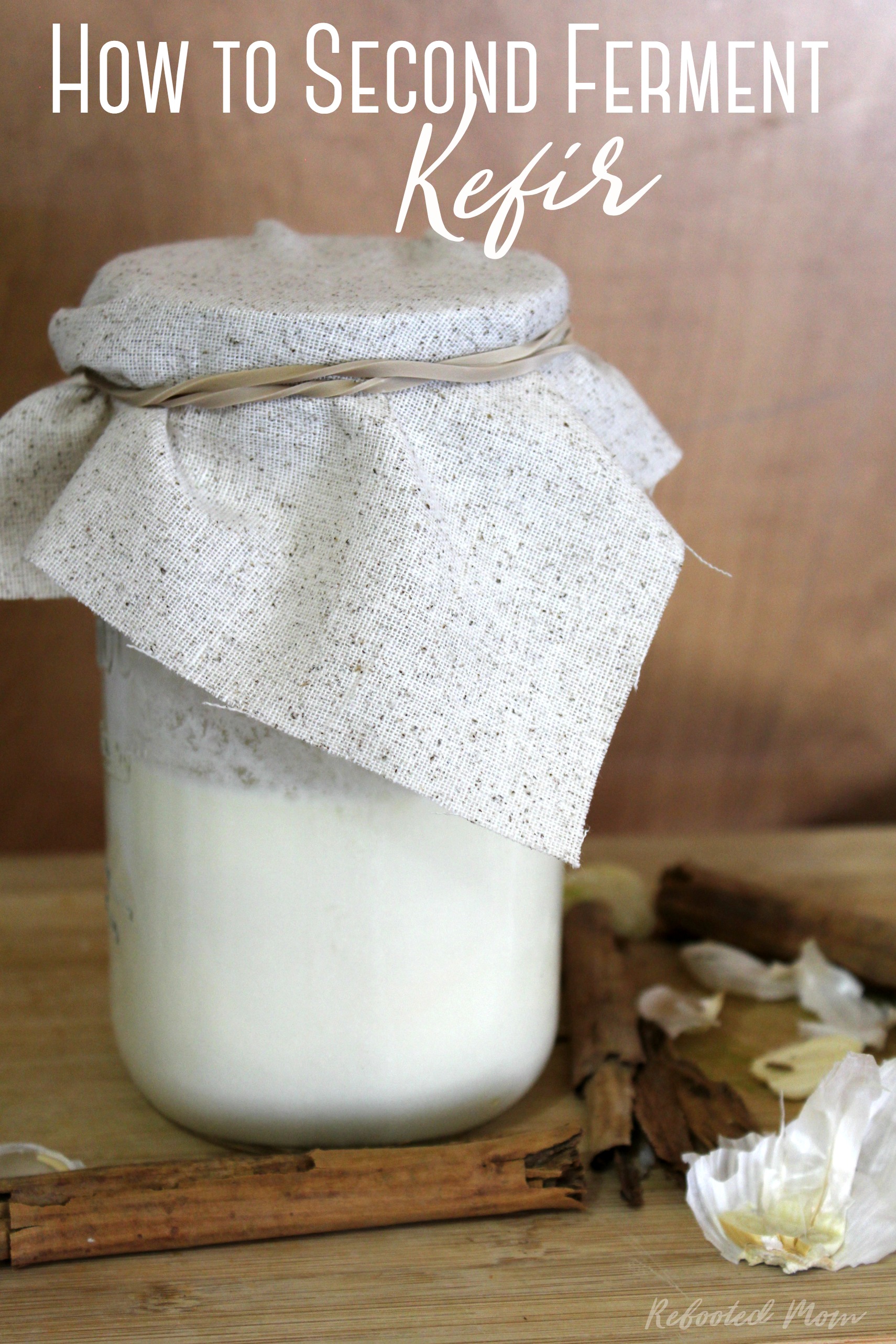
(Our kefir above actually has a canning lid under the cloth wrap, as it second ferments with garlic!)
Allow that kefir to sit for 4 – 6 to even 12 hours. Your kefir might separate (that’s OK!) – taste your kefir to determine if you may want to remove the prebiotic item. If it is fermenting too quickly (in the case of garlic), place it in your fridge to stop the fermenting process.
Before you use your second ferment, remove the prebiotic item. If you are using spices or dry items like cinnamon, or cocoa as your second ferment item, you’ll keep those in there.
If you are using for smoothies made in the blender, you can add more fresh fruit after the second ferment.
How to Use Second Ferment Kefir
Second kefir ferment can be used in a variety of ways. Add some additional fresh fruit, a little maple syrup or honey for sweetener and blend into a smoothie. Or, you can use in your favorite recipe – from pancakes to biscuits, we’ve also used it in banana bread (obviously not with garlic!)
When you decide to ferment, opt for additions that will enhance the recipe you are using it for. For example, if you are making biscuits, you might want to use garlic to second ferment your kefir. Or, if you are making pancakes, you could second ferment with cinnamon or, chai, etc.
Once you remove the prebiotic from your kefir (oranges, strawberries, garlic, etc.), refrigerate your kefir until you are ready to use it.
Have you ever tried second ferment kefir?

First: I just discovered your website; love it!
Second: I have been experimenting with second-fermenting my kefir (been making kefir for years). Would like to add manuka honey AND pineapple together for the second ferment. Question: Is it OK to use these two together, or should I second ferment with only one item?
I would second ferment with the pineapple and skip the makuka. If you use manuka it may have an effect on the probiotics in the kefir. Once you are done second fermenting with the pineapple, you can add a bit of honey for serving, but I wouldn’t let it sit too long in the kefir.
I’m so glad you found my site! I hope you have a beautiful week, Mary!
Well, here it is almost a year later and I just now saw your reply to my question, Sheryl! Thank you so much for your advice. I realize that Manuka honey is used in many medical applications (it acts like an antibiotic), so it makes sense not to put it in the kefir. I will stick to the pineapple.
I’m thinking I’d like to add ground chia seeds to my kefir to second ferment it.
Again, thank you for your reply, and I’m SO sorry it took so long for me to find it!
Hope you stay well in these uncertain times!
~~ Mary Huber
Could I add frozen bananas to the second ferment?
You definitely can!
I’ve been experimenting with the second ferment using freeze dried garlic. When I burped my jar a few hours in my eyes were stinging the garlic was so strong! I was wondering though, garlic is said to have anti fungal and anti microbial properties, do you find this changes your kefir?
Hi. I’m wondering for your second ferment if you could use frozen mango and put in a blender then second ferment it for 12 hours. Or does the fruit have to stay whole.?
Thank you
You sure could… blending it is great because it’ll allow it to come to room temp better. I would do it for 8-12 hours for a second ferment. Let me know how it goes for you Diana!
Hello.
Can you use frozen mango for your second ferment? Also do I have to leave the fruit whole? I would like to blend it to get more of the flavor. How long should I ferment it?
Thank you
My 2nd ferment separated, does that mean it’s bad, or can I just strain it…I did add orange peel in it … I’m new to this so
Does a second fermentation produce more grains?
Not really because when you second ferment you are taking the kefir away from the original grains.
So say for example you have milk + grains = kefir
You let the milk + kefir ferment for 12-24 hours, then strain = you have kefir
You put the grains back in a jar, cover with new milk; then you take the strained kefir and put that in a new jar to second ferment.
Hopefully that makes sense.
Do you put the second kefir fermentation into a airtight jar? Or the same way as the first fermentation?
Jimmy – same way as the first fermentation.
Hello, great article you have! So I am having a hard time finding this anywhere but do you have to burp the second fermentation dairy kefir and plant based milk kefir? I’m so nervous it will explode. Thank you!
No – I didn’t! But then I don’t leave the lid on super tight… I make sure the lid is on quite loose.
Would cocao powder allow it to have a second fermentation or not sugary enough for it to ferment?
Kate, I haven’t tried cacao powder so I can’t give you a definite answer from my own experience!
Have you heard of using baobob powder to second ferment? Have you tried that?
Hi Michelle, I haven’t heard of that! Have you done it? Sounds like I need to try it. Where do you get the baobab powder at (if you don’t mind me asking?)
Are dates good to use for the second Fremont to add more nutritional benifits?
I’m a little late to the party, but I have a question. My second ferment has been separating and the milk is VERY thick, is this normal? I shake it up and still use it but it continues to do this as it sits until I use it up. I’ve been only second fermenting for about 7 hrs. Does it matter that I take it from a shelf in one room and then to the kitchen to strain?
You’re not late — milk kefir on the second ferment does get thick! You can second ferment in a matter of hours (when it’s warmer) and 24-48 hours if it’s cooler. Warm to me is above 65… I would strain it and try it. Second ferments we do at home are much more sour/tart tasting than the traditional kefir you would buy at the store – I’m not sure if you are using raw milk but just remember that if it’s a second ferment from raw milk kefir then it’ll be more tart than commercial varieties (which are often pasteurized and then re-cultured with added vitamins). Hope that helps and let me know if you have questions!
Hi, can I second ferment with just the plain kefir.. no fruit or anything, just plain?
And once its done do I just use it or does it need a stir? Or a strain?
Thanks
Hi Tracey, you sure can – and yes, you’ll likely need to stir or shake it often as second fermenting to ensure it’s the same throughout. I have second fermented more times than I can count and when I second ferment in the summer (it’s hot here in Arizona right now – 115+ by day and hard for our AC to keep up) my kefir gets really thick, really quick. I usually use the second ferment to make smoothies and I’ll add a little fruit to it in the blender to add a little extra sweetness to it. Let me know how it goes for you. Have a beautiful week ahead!
I did a second fermentation and I didn’t strain the first, I hope that’s ok. I only added strawberries, blended, and put in fridge for 12 + hours
I like doing a second ferment and am always looking for new ideas. Garlic and cacao are very interesting ideas. Both filled with nutrients and low in sugar. While you CAN do a second ferment with cinnamon or honey, these are especially antibiotic (clove, too, I think), so, unless I am very mistaken about their effect on kefir, they would kill off the bacteria you’ve worked so hard to grow! I have taken both FOR their antibiotic properties. So, it seems to me you’d be left with a dead kefir-flavored drink.
Sugar is also not probiotic friendly, so, while pieces of fruit (berries, bits of orange, etc.), would increase the yeasts (and, therefore the effervescence), they would probably also reduce the probiotic content of the finished product.
My favorite, at the moment, is citrus peel (especially orange, lemon and lime), as they are loaded with nutrients and are low in sugar. They add lovely flavor and preserve the probiotics. (I am careful about grapefruit, as it is not friendly to all medications.) I also like apple peel, especially Granny Smiths, as citrus and tart apple skins contain pectin, which is good for you, in and of itself, and thickens the kefir. The apple peel is a pretty subtle flavor, but thickens nicely. If I am buying citrus and apples for their skins, I buy organic, as skins do hold pesticides.
I really like the idea of the garlic, as it moves the kefir into a savory arena. It makes me wonder about herbs like thyme or tarragon. Parsley, especially Italian, would add lots of flavor and tons of nutrients. Together great for kefir cheese, I would think! (Rosemary is camphorous , so my guess is that might also have antiseptic properties.) Worthy of research!
I AM WRONG about cinnamon killing off the probiotics in kefir. Please disregard my previous comment — at least the part about the cinnamon! (I may still be right about the honey…). I don’t really understand how cinnamon can be a “Kill” spice for things like Lyme disease and not kill probiotics, but a lot of things are selective, so….
Sorry about that!